The Nebraska Bar Foundation's Standing Bear Scholarship is a scholarship program designed to support Native American students pursuing a law degree at the University of Nebraska College of Law. The scholarship will pay for tuition, books and fees (non-housing) for each semester with the requirement that the applicant remains a student in good standing.
Founders and Purpose: The Standing Bear Scholarship Fund was established by Foundation Fellow Charlie Wright and his wife, Suzy, and Fellow Allen Overcash and his wife, Ginny. The primary purpose of this scholarship is to provide financial assistance to Native American students and honor the legacy of Chief Standing Bear.
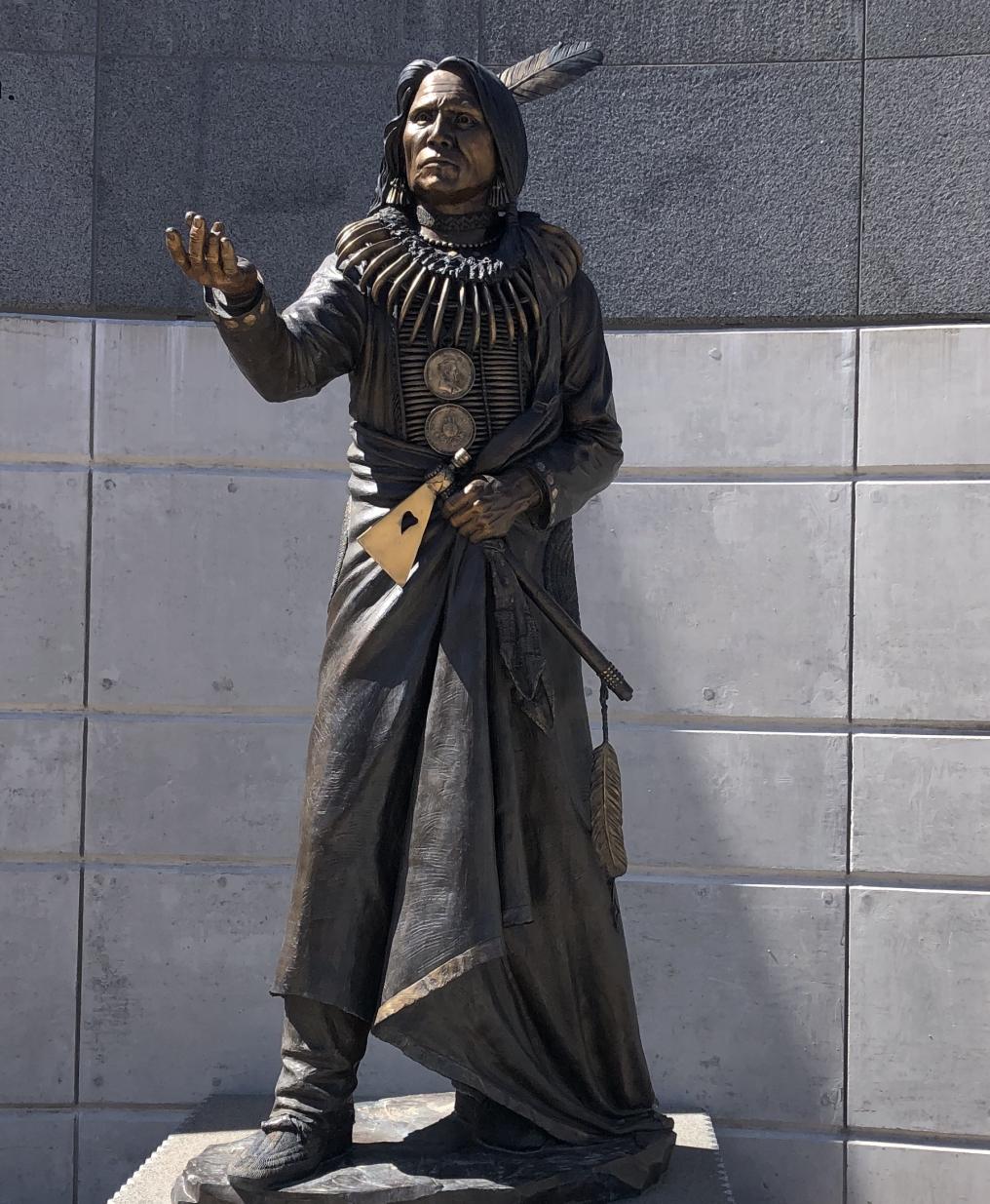
Chief Standing Bear: The scholarship is named after Chief Standing Bear, a prominent Ponca leader who played a crucial role in the legal history of the United States. Standing Bear brought a federal habeas corpus suit against the government in a case that arose after the Ponca Nation was forcibly removed from their ancestral lands in Nebraska to Indian Territory (present-day Oklahoma) by the U.S. government, violating treaty obligations and causing severe hardship, including the deaths of Standing Bear’s son and other tribe members. In accordance with his son’s dying wish, Standing Bear and a group of followers returned to Nebraska to bury him on traditional lands. Because leaving the reservation without government permission was illegal, they were arrested by General George Crook and his military. Standing Bear challenged the legality of his detention. The central legal question was whether Native Americans could be recognized as “persons” under U.S. law and thus entitled to the protections of habeas corpus. The government argued that Native Americans were not persons in the legal sense and could be forcibly returned to Indian Territory.
On May 12, 1879, Judge Elmer S. Dundy ruled in favor of Standing Bear, declaring that “an Indian is a person” under the law and entitled to habeas corpus protections. The court emphasized that Native Americans have the inalienable right to life, liberty, and the pursuit of happiness, and that no lawful authority existed to forcibly remove them from their lands or confine them to reservations against their will. Standing Bear famously stated in court, “That hand is not the color of yours, but if I pierce it, I shall feel pain… I am a man. The same God made us both." The ruling was a landmark in Native American civil rights, marking the first time a federal court recognized Native Americans as persons under U.S. law. It set a precedent for future legal protections and civil rights claims, influencing later cases and policy reforms. We honor Chief Standing Bear's legacy, and his life's work serves as inspiration for this scholarship.
Eligibility Criteria: To qualify for the Standing Bear Scholarship, applicants must meet specific eligibility requirements. These typically include:
- Membership in a federally recognized Native American tribe which is eligible for resident tuition at the University of Nebraska-Lincoln. Those tribes are indigenous to or have historically migrated to/from Nebraska. A full list is available on the University of Nebraska-Lincoln's website HERE and on the Foundation's Standing Bear Scholarship application.
- Possession of an undergraduate degree.
- Admission as a full-time student at the University of Nebraska College of Law.
Educational Support: Recipients of the scholarship are expected to pursue a prescribed course of study, culminating in their graduation from the University of Nebraska College of Law. Beyond academics, they are encouraged to use their legal education to address issues of significance to their heritage and develop leadership skills.
Mentorship: Foundation Fellows are actively involved in mentoring the scholarship recipient throughout their law school experience, offering guidance and support to help them navigate their legal education and future careers.
Donations and Legacy: The scholarship fund relies on donations to sustain its mission. Donors who wish to contribute to the scholarship fund can do so through the Nebraska State Bar Foundation. These donations help carry forward the legacy of Chief Standing Bear and his commitment to basic human rights.
Success Stories: The scholarship has a history of successful recipients who have gone on to make a positive impact in the legal field and their communities. Past recipients include Jennifer Bear Eagle, Senior Attorney at Cedar Tree Native Law, Omaha; Kate (Quinn) Martz, Attorney at Baylor Evnen, Lincoln; the Hon. Andrea Miller, District Court Judge, 12th Judicial District, Scottsbluff; and Parker Upton, Attorney at Bigham and Tanner, Illinois.
The Bar Foundation's Standing Bear Scholarship is a significant initiative aimed at supporting Native American students in their pursuit of a legal education. By honoring the legacy of Chief Standing Bear and his advocacy for basic human rights, this scholarship fund seeks to empower the next generation of Native American legal professionals and leaders.
To read more about the Standing Bear Scholarship Fund and to apply, click here.
To donate to the Standing Bear Scholarship Fund and to continue its legacy, click the donate button now.